Carving Out Time for Art: Real Stories from Creative Lives
Between May 2015 and May 2016 we shared a weekly conversation with an artist who is also a mother, exploring how raising children reshapes the way art gets made. The result was a trove of honesty, generosity and genuinely useful advice. Since 2016 we have widened the lens to all kinds of makers — parents, retirees, people balancing day jobs, late bloomers — anyone figuring out how to protect creative time. From 2017 to 2020 our focus shifted to a book on creativity and motherhood, and The Motherhood of Art is now ready for you to order.
Get the BookMost of our day-to-day conversation happens on Instagram — come join in. Follow along with Artist Features via #carveouttimeforart, Creative Conversations via #COTFAcreativeconvos, and Artist Takeovers via #artisttakeover.
Featured Artist Conversations
In Their Own Words
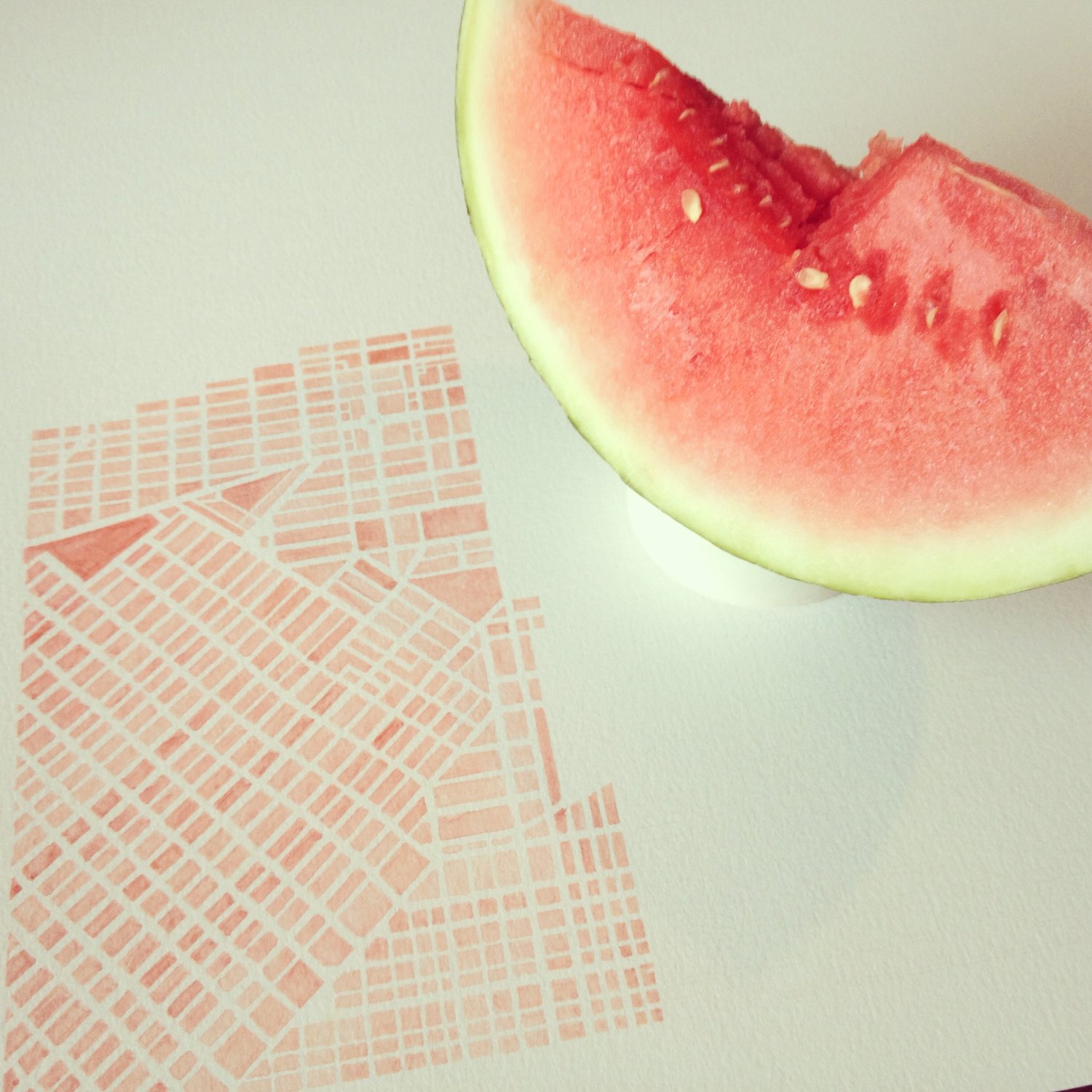
Kirsten Sparenborg on Painting a City
Kirsten avoids pinning a city to a single frozen moment; she is drawn to how places shift over time and finds old maps endlessly revealing. Clients usually come to her with an emotional bond to a city, and her task is to catch its character — its outline, its landmarks, the interplay of land, water and elevation. Tracing each block with her brush feels like an intimate exchange with the place: she imagines the buildings, the landowners, the history held inside that block, sometimes knowing and often simply imagining, until the whole process carries her into a city that is both lived and imagined.
Read MoreLaura Browning on a Letter That Changed Things
A handwritten note from a longtime commission client arrived one day, expressing sadness that Laura had stopped painting. It startled her — the thought that stepping away from her work could matter to someone else had never crossed her mind, and those words stayed with her for a long while.
Read MoreMegan Carty on Modeling Creative Courage
Megan takes pride in her identity as an artist and in what it shows her children: that you needn't wait for someone else to make your dreams happen, that an idea can be taken and run with, limited only by imagination. She wants them to see that going your own way demands planning and discipline, and that watching her dedication and thinking process may feed their own passions. She also values that they see her as a whole person, not only as Mom.
Read More1 CommentMelanie Roach on Simple Creative Wishes
Though her mind runs constantly in idea mode, Melanie's hopes for her art are modest: to keep creating, to keep snatching those precious fragments of time and drive that send her slipping into her little studio when her boys aren't watching. Whether it's five minutes or a generous half hour before dawn, she wants to keep adding her shark-fin marks, loose scribbles, color pops and touches of flair — and to keep buying glorious tubes of paint, textured watercolor paper and Neocolor II crayons while her work evolves through new techniques, processes and mediums.
Read MoreCommentPaula McGurdy on Working in Small Windows
Paula's creative process has ebbed and flowed, and she suspects she has actually been more prolific since having children — an urgency to make and create in the time she's given, usually once the kids are asleep. It has pushed her work toward a smaller scale, and lately toward watercolors, which pack away easily and dry quickly.
Read MoreCommentTags: art school, BFA, Dublin, England, home studio, Ireland, late bloomer, London, stay at home mom, watercolor, young children
Monika Forsberg on Children as Teachers
Monika believes her children have made her a better person and a better artist. They have taught her a great deal and reminded her what being a child feels like, how to let go of what doesn't matter, how to be present and how to truly see. Nothing compares to the love she feels for them — though she jokes that they may look at their parents and decide to get a proper job instead. Whether her art has improved them, she isn't so sure.
Read More1 CommentMaura Segal on Thinking Ahead
Maura chose to raise her own children without compromise, which meant her thinking and creative process sometimes happened away from the studio. The strategy: arrive at the easel with a very clear idea of what she wanted to do.
Read MoreCommentJulia Rymer on the Value of Creativity
For Julia, showing children what creativity means is a priceless lesson, especially in a world that needs it. We steer kids toward STEM without recognizing how much creativity those fields demand, she argues, while diminishing the role the arts and humanities play in our lives and culture.
Read MoreCommentTags: BFA, California, home studio, MFA, part time job, Pratt, San Francisco, young children
Emily Harrison on the Upside of Short Sessions
Emily has found that working in small bursts, though sometimes frustrating, carries real benefits. Plenty of time between stages lets her reflect on a painting, live with it for a day or two and return with fresh eyes to build up the colors. Limited time also pushes her to be bold and take risks — there simply isn't room to procrastinate.
Read MoreCommentTags: acrylics, color lover, England, new mother, representational painting, young children
Marissa Huber on Making It Normal
Marissa loves that the past year has demonstrated how artists with kids can thrive and find time to create. It rarely strikes her as extraordinary anymore, because she knows people who make it work every day. She wants it to become ordinary for women to create or do what they love, with or without kids — to banish mom guilt, and for the next generation, for the mother struggling right now, and for anyone wondering whether they can have children and be an artist, to hear: we get it, you can be a mother and still make art.
Read MoreCommentCassandra Ott on Accountability and Accumulation
The project kept Cassandra accountable to herself and showed her that a whole body of work can be built a little at a time — it all adds up if you keep at it. It also made her sit down and do the work even when inspiration or mood was missing. She works well within boundaries and parameters, and she has learned to make that work in her favor.
Read MoreCommentTags: Chicago, collage, colored pencils, dayjob, freelancer, home studio, New York, Projects, young children
KenT Youngstrom on Obsession
If you want to be an artist, a maker, a creator — or fill in the blank — you have to be one with everything you have, KenT says. It isn't a job; it is who and what you are, it is your obsession. And if you want people to be so captivated by your work that they'll pay anything for it, you had better be over the edge, strung out on exhilaration and obsessed with what you do.
Read More1 CommentTags: author, Charlotte, North Carolina, older children, studio outside the home, working artist
Trudi Murray on Climbing Back to the Work
Once you hit the bottom, Trudi found, the choice gets simpler: stay in the dark forever or get out. It was now or never — live this one precious creative life or let it slip by, remembered only through angry late-night doodles (and three amazing children). She picked up a pencil and began to draw, or perhaps claw, her way up to where she is now. It has been hard work: a commitment to draw every day, good drawing or not, and simply keep going. That was five years ago. She has wavered constantly, especially in confidence, but she has rediscovered her own style and now feels confident and strong in it, painting daily and selling her work regularly — a joy she can hardly put into words.
Read MoreTags: abstract art, grief, illustration